
The Static Geolocation Problem on Tinder and Bumble
Mainstream dating apps were built around one quiet assumption: you live in one place. The whole product - the radius slider, the "people near you" feed, the local-match ranking - assumes your phone wakes up in roughly the same zip code every morning. For 95% of users, that's fine. For a CDL driver running a Dallas-to-Atlanta lane, it's structurally broken.
Here's what actually happens on Tinder when you're OTR. Monday you're in Dallas and the app shows you women in Dallas. Tuesday you're in Little Rock - the app shifts, and now you're staring at women you'll never see again because tomorrow you're in Birmingham. By Thursday you're in Atlanta with a fresh stack of new matches, none of whom know you exist, and the Dallas matches from Monday are wondering why you've gone silent for 72 hours.
Bumble works the same way. So does Hinge. The radius is the foundation of the matching engine, and the radius assumes you stay put.
Your phone moves 600 miles a day. The algorithm assumes it doesn't.
Mainstream apps update your location every time the GPS pings, which means your match pool resets constantly. You never build momentum in any one city, and the women you matched with yesterday have no idea you're back through next week. Every reset is a relationship started from zero.
eHarmony lets you lock location to a specific city or state - useful if you run a known regional lane. Match.com has the largest legacy base (42+ million accounts since 1995) and a 7-day free trial, but neither of those solves the core problem: the apps weren't designed for a man whose home address is technically a sleeper berth.
How Algorithms Punish Slow Responders on the Road
This is the part most truckers don't realize. Dating-app algorithms don't just rank profiles by photos and bio - they rank by behavior. The biggest behavioral signal? Response speed.
Tinder, Bumble, and Hinge all reward users who reply within minutes. Reply fast and the algorithm boosts your profile into more women's feeds. Reply slow - or worse, reply 14 hours later because you were behind the wheel through three states - and the algorithm quietly demotes you. Your profile gets shown to fewer people. Your matches dry up. You assume the app is "dead." It isn't. You've been shadow-throttled for the crime of having a job.
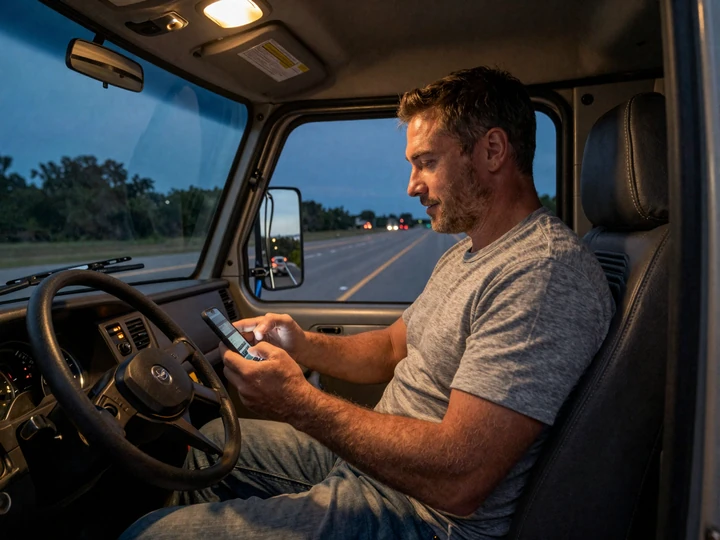
For a CDL driver, this is brutal. The federal Hours of Service rules give you an 11-hour driving window inside a 14-hour duty period. During those hours your phone is in the dock, on Do Not Disturb, and you are legally and morally barred from typing back to a stranger about her dog. By the time you're parked at a Love's Travel Stop and showered, six hours have passed. The conversation is cold. The algorithm has already moved on.
It gets worse when you stack it with the geolocation problem. The app sees a profile that responds slowly and changes location daily, and it draws the conclusion any spam-detection system would draw: this looks like a bot or a traveling scammer. The deboost is invisible but real. We talk about this in more detail on our Trucker Dating vs Tinder comparison page.
"I'd match with a woman Monday, get my 30-minute lunch break Wednesday to reply, and she'd already unmatched. After six months I deleted the app. It wasn't dating. It was a part-time job I was failing at."